


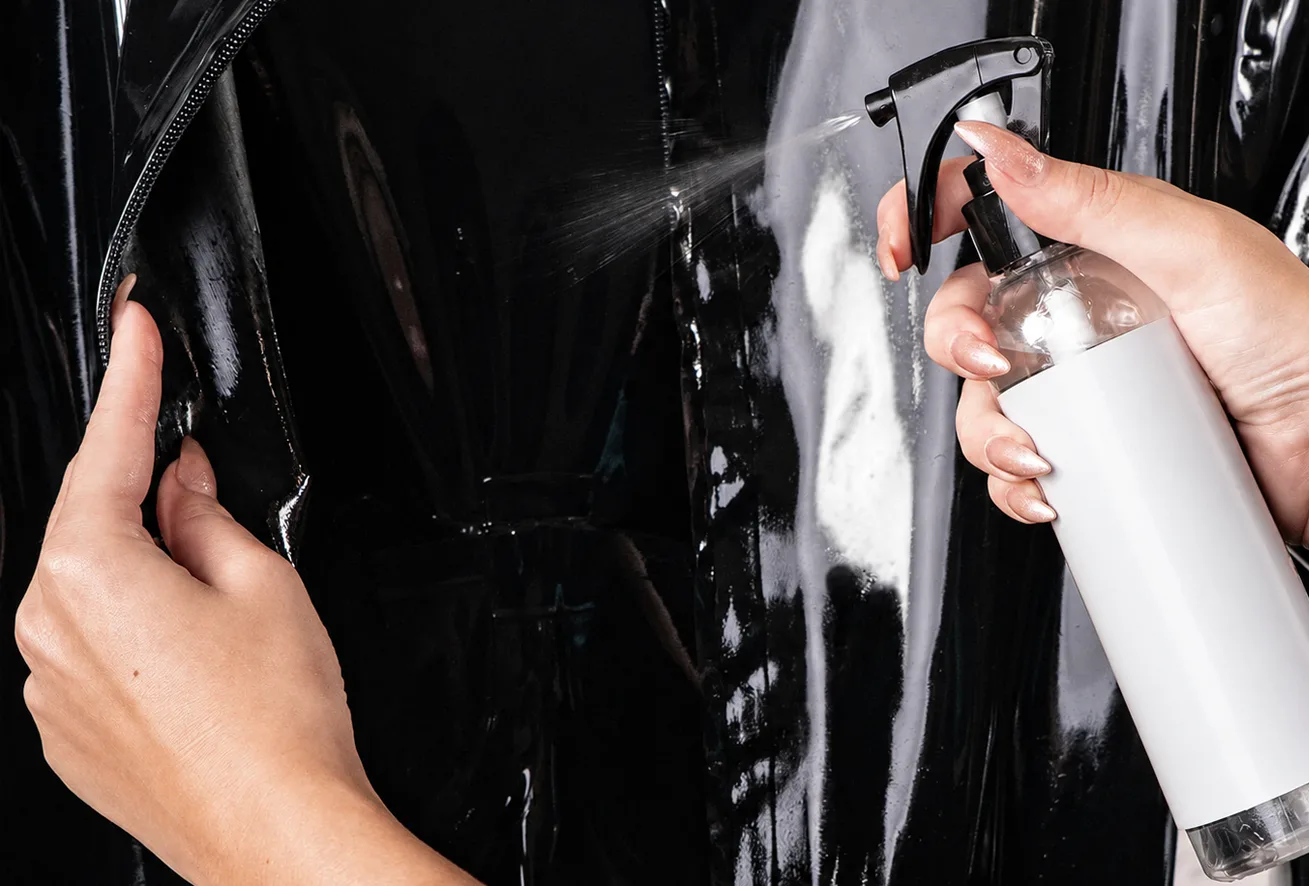
Rubber looks incredible when it is treated properly. Deep shine, tight fit, smooth feel, that proper second-skin look. But if you treat latex like a gym shirt and throw it in a pile after a session, it will eventually punish you for it. Cracks. Sticky patches. Weird smells. Torn seams. Dead shine. Good rubber care is not difficult. It just needs discipline.
Wash after every session
There are two types of rubber people:
- The ones who wash their gear after every wear
- The ones whose suits smell like a damp basement
Always wash your latex after wearing it. Sweat, body oils and lube slowly damage the material over time. Even if the suit still looks clean, the inside usually is not. Use lukewarm water with a mild latex cleaner or gentle soap. Hand wash only. No washing machine nonsense. Brands like Viviclean, BeGloss Wash and Radical Rubber cleaner all work perfectly fine. You do not need industrial chemicals. You just need consistency.
After washing, rinse everything properly. Leftover soap can dull the finish and leave residue on the latex.
Drying
A lot of people wash their gear and then ruin it during drying. Rubber traps moisture incredibly well, especially in gloves, socks, hoods and bedding. If you throw slightly damp gear into storage, it will eventually smell awful and start degrading.
Dry it properly. Not “good enough”. Properly. Pat it with a towel first, then let it air dry naturally. Larger items like catsuits or sleepsacks can take a surprisingly long time to dry fully, especially around seams and feet. And no, your radiator is not a shortcut. Heat slowly destroys latex. Same goes for direct sunlight. Think cool, dark and dry. Latex basically lives like a vampire.
Shine makes a massive difference
Unpolished latex can look flat and lifeless. A good silicone shine completely changes how rubber looks under light. Most people in the scene use Vivishine, and honestly, there is a reason for that. It works well, gives a deep shine and lasts. BeGloss is also popular, especially for dressing aid and polishing.
Spray silicone works fine for quick touch-ups, but liquid silicone usually gives a better finish overall. The mistake beginners make is using way too much. You are polishing rubber, not marinating chicken. A thin even layer is enough. And yes, freshly polished black latex under club lights still looks unbeatable.
Oil is the enemy
This part matters. Oil destroys latex. Not “maybe damages it a bit”. Properly destroys it. Never use baby oil, Vaseline, massage oils or random household products on rubber. If it contains petroleum or oils, keep it away from your gear. Stick to water-based lubes and proper latex-safe silicone products. A lot of damaged suits started with somebody thinking, “This should probably be fine.”
Learn to dress properly
Most latex damage happens while getting dressed. People get impatient, yank seams, force zips and then act shocked when a panel explodes. Rubber requires a bit of patience. Take off rings and watches first. Sharp nails are dangerous too. Use dressing aid if needed and work the suit on gradually instead of trying to wrestle yourself into it in thirty seconds. Support the material around zips while closing them. Especially on tighter gear. A well-made latex suit is strong. A badly treated one is not.
Store it properly
Good storage matters more than people think.
Do not leave latex:
- In sunlight
- Near heaters
- Folded wet
- Crushed into bags for weeks
Store it somewhere cool and dark. A wardrobe works perfectly.
Catsuits and uniforms are usually best hung on thick plastic hangers. Smaller items can be folded neatly. Some people use tissue paper between layers to prevent sticking, especially with older or heavily polished gear.
Also: be careful with metals. Copper and brass can permanently stain latex. Cheap jewellery, coins and bad zips have ruined plenty of expensive pieces over the years.
Chlorination helps
A lot of modern latex is chlorinated now. That means the surface has been treated to make dressing easier and reduce stickiness. It helps. Especially with tighter suits.
But chlorinated latex still needs proper care. You still need to wash it, dry it and store it correctly. “Chlorinated” does not mean indestructible.
Common beginner mistakes
Most rubber people make at least one of these mistakes at some point. Usually because they are too excited, impatient or simply do not know better yet. The problem is that latex can be unforgiving. One bad habit repeated often enough can ruin expensive gear surprisingly quickly.
The classics never change:
- Using hot water
- Leaving gear in sunlight
- Using random cleaning sprays
- Forcing zips
- Wearing jewellery
- Leaving latex in a hot car
- Stuffing damp gear into drawers after a session
Every experienced rubber person has either done one of these or watched somebody else do it in horror.
Final thoughts
Taking care of rubber is part of wearing rubber. Simple as that. A well-maintained suit feels better, shines better and lasts far longer. Good care also saves money because replacing damaged latex gets expensive very quickly.
And honestly, there is something satisfying about opening your wardrobe and seeing every piece clean, polished and ready to wear. That is proper rubber culture.

Discussion
No comments yet. Start the discussion.